
One execution layer. Four products. Your systems keep authority.
wiseDo is the vendor-neutral operational execution layer for factories and warehouses: Sight creates verifiable evidence from the cameras and signals you already have, PlantOps turns it into governed work and sealed operational truth, Flow is the orchestration layer that compiles a facility workflow into releasable, journalled work, and Twin turns your layouts into scenes you can simulate against — all on one Core + Connect foundation. Your MES, ERP, WMS and PLCs remain the systems of record: they keep authority for their native facts and controls. Readiness differs by capability, and we publish it below rather than averaging it into one claim.
Every capability, with its real readiness.
Most platform pages describe a destination and let you assume it has arrived. This one does not. Each capability below says what a buyer gets, which product it belongs to, and how far along it actually is. Pilot means running with pilot customers. In development means built and progressing, not deployable. Research means design and prototype work, nothing more. A repository existing is not a release.
Safety & PPE compliance
Sight. Helmet and vest compliance plus restricted-zone entry, per person, across cameras. Rules are reviewed and released before they reach a camera.
Verifiable evidence & CAPA
Sight. Sealed report bundles a third party can check without us, retention with legal hold, and corrective actions carrying the fields ISO 45001 clause 10.2 asks for.
Camera commissioning
Connect. Discover the IP cameras on your network, store per-camera credentials encrypted, and bring a wall of feeds up before anyone writes a rule.
OEE & cost of loss
PlantOps. Tenant-scoped OEE, downtime and cost-of-loss computed under one published calculation policy and sealed as an immutable evidence pack.
Workforce qualification
PlantOps. Skills, certifications and shift coverage, resolved deterministically: is this operator qualified for this assignment, answered the same way twice.
Governed reporting
PlantOps. Report definitions with bounded queries, provenance on every figure, and exports that carry where each number came from.
Workflow orchestration
Flow. A facility workflow compiles into a typed graph and an immutable release; every command crosses one gateway with a journal and every outcome returns to an inbox. Running in simulation today, against Twin’s warehouse — no physical adapter yet.
Cycle time & SOP adherence
Sight. Step order, visibility and timing against a registered reference. Validated on one demonstration workflow, not on a customer line.
AI Supervisor
Across the platform. The investigation layer: it reads the same evidence Sight and PlantOps seal, proposes options with the record attached, and never authorises its own recommendation.
Layout to simulation
Twin. A DWG or DXF layout becomes a simulation-ready 3D scene: racking, docks, conveyors, chargers and zones mapped to a parametric asset library. Design and prototype stage. Automation Designer →
Robot skills & task transfer
Physical AI. A dual-arm cell on ROS 2 with guarded teleoperation, and the task recipes that let a validated skill move to a second station. Lab work, not a customer station.
Heterogeneous fleet control
Flow. One dispatch layer over robots from different vendors. The protocol work is live; vendor coverage is not yet something to buy against.
Machines, robot fleets and line integration are specified, sourced and delivered by wiseDo as part of a programme; they are not software readiness and are not labelled here.
Where this is going
One failing press, if every module were live.
A 35-second simulation, and we label it as one. It shows the loop we are building toward: Sight hears a press degrading, maintenance predicts the failure, quality holds the batch, the schedule replans, the twin reroutes the robots, energy shifts load off-peak, and the operator approves it with one tap. Several of those modules are in development today — the readiness map above says which. This is the destination, not a recording of a customer site.
One operating loop. Your systems keep authority.
Plant observations become accountable outcomes through one governed loop. Systems of record stay in charge of their own facts, AI recommends while people approve, and every executed action feeds measured evidence back into the plan.
MES, ERP, WMS, QMS, PLCs and robot controllers keep authority for their native facts and controls. wiseDo projects and reconciles; it does not become a second master record.
The AI Supervisor is an independent investigation layer, not a feature inside one product: it reads the sealed evidence every product writes, reconstructs what happened, and proposes options with the record attached. It has no authority of its own. Policy and accountable roles authorise consequential work, and no recommendation reaches a device without approval.
Controller acceptance and measured plant outcome are separate facts. Both return as evidence that updates plans, datasets and operating knowledge, through review, never silently.
So where does PlantOps sit, if the MES keeps authority?
A fair question, and the answer is “both, and the plant decides which”. PlantOps does two different jobs, and conflating them is how an execution layer quietly becomes a second master record.
Where an MES already exists, PlantOps overlays it. The MES stays authoritative for its own source facts — orders, routings, genealogy, confirmations. PlantOps computes operational truth on top: OEE, downtime and cost of loss under one published calculation policy, sealed as an immutable evidence pack. Downstream reporting consumes that pack read-only and never recomputes it, which is what stops two systems quoting two different OEE figures for the same shift.
Where no MES exists — the common case on an Indian brownfield floor running on spreadsheets and a whiteboard — PlantOps supplies the execution record itself: work orders, confirmations, downtime reasons, traceability. It is then the system of record for those facts, and it says so, with the same lineage and the same audit chain. What it never does is become a second claimant to facts a system already owns.
The authority stack
| Business truth | ERP, MES, WMS, QMS and designated source systems. |
| Operating policy | Identity, role, site, purpose, risk class and bounded approval. |
| Workflow intent | wiseDo Flow owns durable orchestration and compensation. |
| Execution | Device adapters and controllers interpret allow-listed commands. |
| Safety | Local interlocks, safety PLCs, guarding and emergency stop always win. |
Five rules we design by
- Project, do not appropriate. Reconciled projections with lineage, never a second master record.
- Recommend, do not self-authorise. Consequential AI output needs a person or explicit policy.
- Orchestrate, do not bypass. Work routes through permit-bound adapters, never straight to actuators.
- Verify, do not assume. Controller acceptance and measured outcome are separate facts.
- Learn, do not silently mutate. Feedback creates review candidates; releases still pass reproducible gates.
Reference architecture, published at the level of product boundaries and operating rules. It describes how the platform is designed to behave, not a certification and not a claim that every capability is deployed on every site today.
Your plant runs as one system.
The vendors who equip it don’t.
One platform beats three vendors
The usual way to automate is to buy each piece separately (machines from one vendor, robots from another, software from a third) and pay, in money and months, to wire every pair together. The platform changes the shape of the problem.
Integrations collapse
Every device connects once: to the platform. Adding a machine no longer means re-wiring everything else in the plant.
One record of truth
Quality, schedule, movement and ERP read the same live data. Nothing re-typed, nothing reconciled at month-end.
One accountable partner
Machine, robot and software issues land on one desk: ours. No vendor triangle, no finger-pointing between suppliers.
Three layers, one accountable partner
The platform is software-first and runs on the equipment you already own. Where new hardware is needed, wiseDo specifies, sources and integrates it, one desk responsible end to end.
Machines and robot fleets, delivered by wiseDo
When a line needs new machines or fleets, wiseDo specifies, sources and integrates them. Vendor-neutral, with single-point responsibility. The catalogue and integration details live on their own page so the software story stays the software story.
Explore machines, robots & integrations →Vendor-neutral, open-protocol architecture
Four layers, one data model. Machines and vehicles publish over open protocols; PlantOps turns their signals into schedules, quality records and audit trails; the enterprise layer keeps your ERP in sync.
What happens when something goes wrong
The clearest way to see the platform: follow a single defect through it. On a fragmented stack, each of these steps is a phone call, a spreadsheet or a day-late report. Here they are automatic.
We don’t sell you parts.
We take responsibility for the whole loop.
The full catalogue, layer by layer
The modules below share one data model and are integrated by wiseDo. Availability is labelled per module: available, pilot, in development, or hardware (machines and fleets integrated by wiseDo).
See supported integrations: systems, scope, read/write and status →
The machines that make your product
Built to order with our proven machine-building partners: specified, commissioned and instrumented for PlantOps by wiseDo from the first day. One contract, one accountable team.
Inspection & testing
Vision inspection, OCR, barcode detection, functional test benches, end-of-line testing.
Material handling
Conveyors, palletizers, gantry robots, vacuum lifters, overhead cranes, transfer systems.
Assembly & fastening
Automatic assembly, screw tightening, riveting, press fit, servo press, nut runners, bearing press.
Packaging & labeling
Filling, capping, sealing, shrink wrap, cartoning, case packing, labeling, inkjet printing.
Specialized machines
Pharmaceutical machines, food & beverage automation, press & forming equipment.
Mobile, vertical & robotic solutions
Best-fit fleets from leading robotics OEMs, integrated by wiseDo over VDA 5050 and open protocols. Material moves itself: fleets are dispatched from the central platform, called automatically by the same signals PlantOps already watches: low stock, finished pallets, changeovers.
AMR / robot fleets
Autonomous mobile robots for material movement, with jobs dispatched from the central platform.
AGV / tuggers
Automated guided vehicles for line-side replenishment, called automatically on low-stock signals.
Forklifts & material handlers
Automated forklift systems with load handling, stackers & reach trucks.
ASRS systems
Automated storage & retrieval systems for optimized warehouse operations.
4-way shuttle systems
High-density multi-level storage with rapid item retrieval.
Cobots & industrial robots
Collaborative & 6-axis robots for assembly, welding, handling & packaging.
wiseDo PlantOps: the operating system for your shop floor
This is the layer we build ourselves, and the reason the other two behave as one system: live visibility and reason-coded downtime running today, with quality, traceability and finite-capacity replanning behind them, layered over the equipment you already run. Each capability below carries its own readiness.
Deploy in weeks, not years
- Live data on your floor this quarter
- No rip-and-replace
- Layered over existing machines & ERP
- SME-sized pricing
- Modular by design
Real-time control
- Live OEE, downtime & output
- Automatic bottleneck analysis
- Reason-coded stoppages
- No day-late reports
- Mobile access anytime, anywhere
Live visibility & OEE
OEE, output and downtime computed under one published calculation policy and sealed as an evidence pack, so reporting consumes it rather than recomputing it.
Downtime & bottlenecks
Every stoppage captured and reason-coded, with cost of loss attached to the reason rather than to the shift total.
Workforce qualification
Skills, certifications and shift coverage, resolved deterministically against the assignment in front of you.
Governed reporting
Report definitions with bounded queries and provenance on every figure, exported with the lineage attached.
Traceability & genealogy
Product history with serial, lot and batch records, built on the same append-only store.
Quality & SPC
In-process checks, SPC charting, non-conformance workflows and automatic holds.
Paperless execution
Electronic work orders and version-controlled digital instructions.
ERP integration
Connectors for SAP, Tally and Busy over secured connections. See integrations for what is supported today.
Planning & scheduling
Due-date-driven dispatch running today; finite-capacity replanning from live floor data is the next step, not a shipped one.
Automation designer
Model an automation change and estimate its return before you commit capital.
Built for the plants that keep industry running
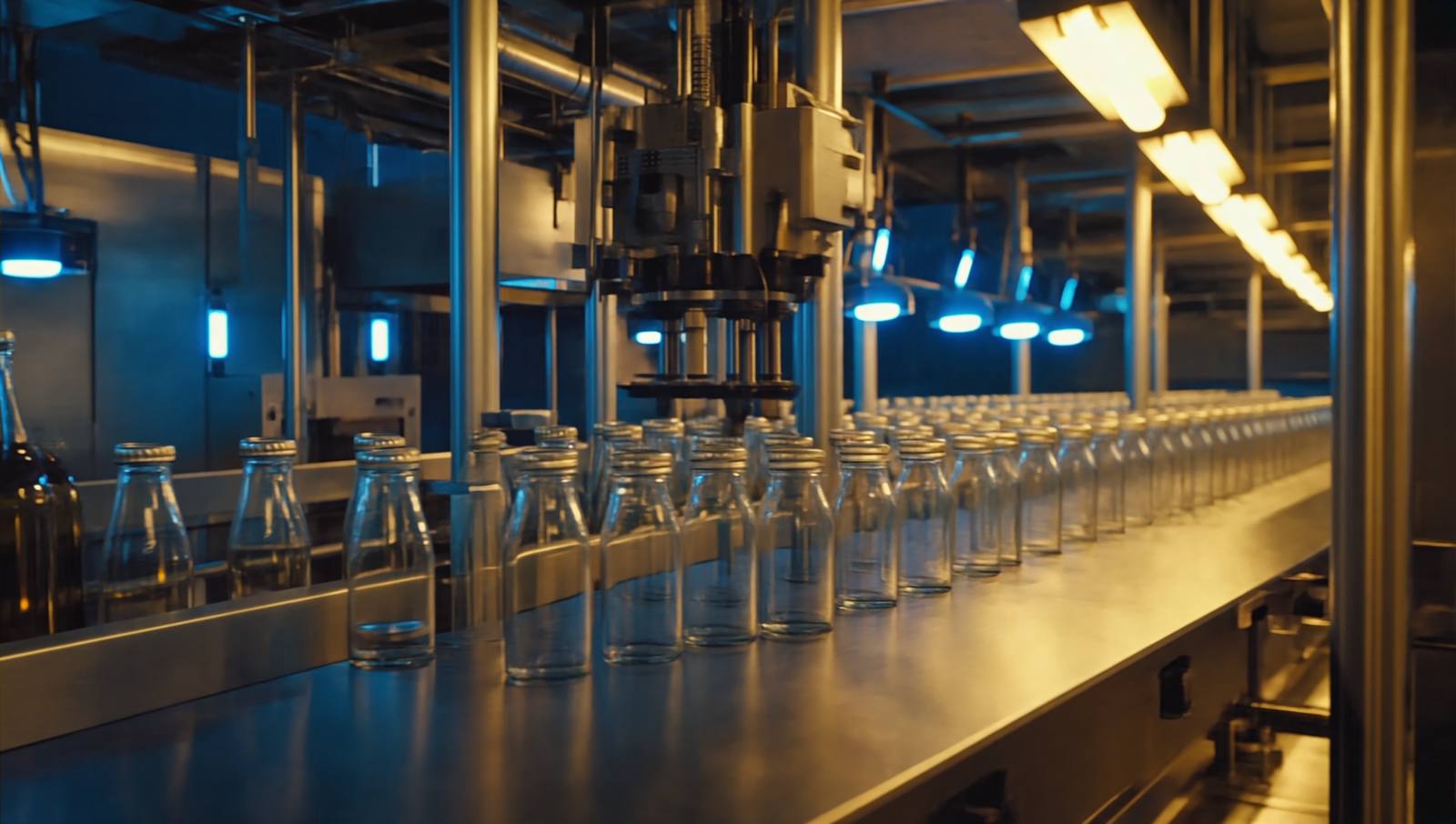
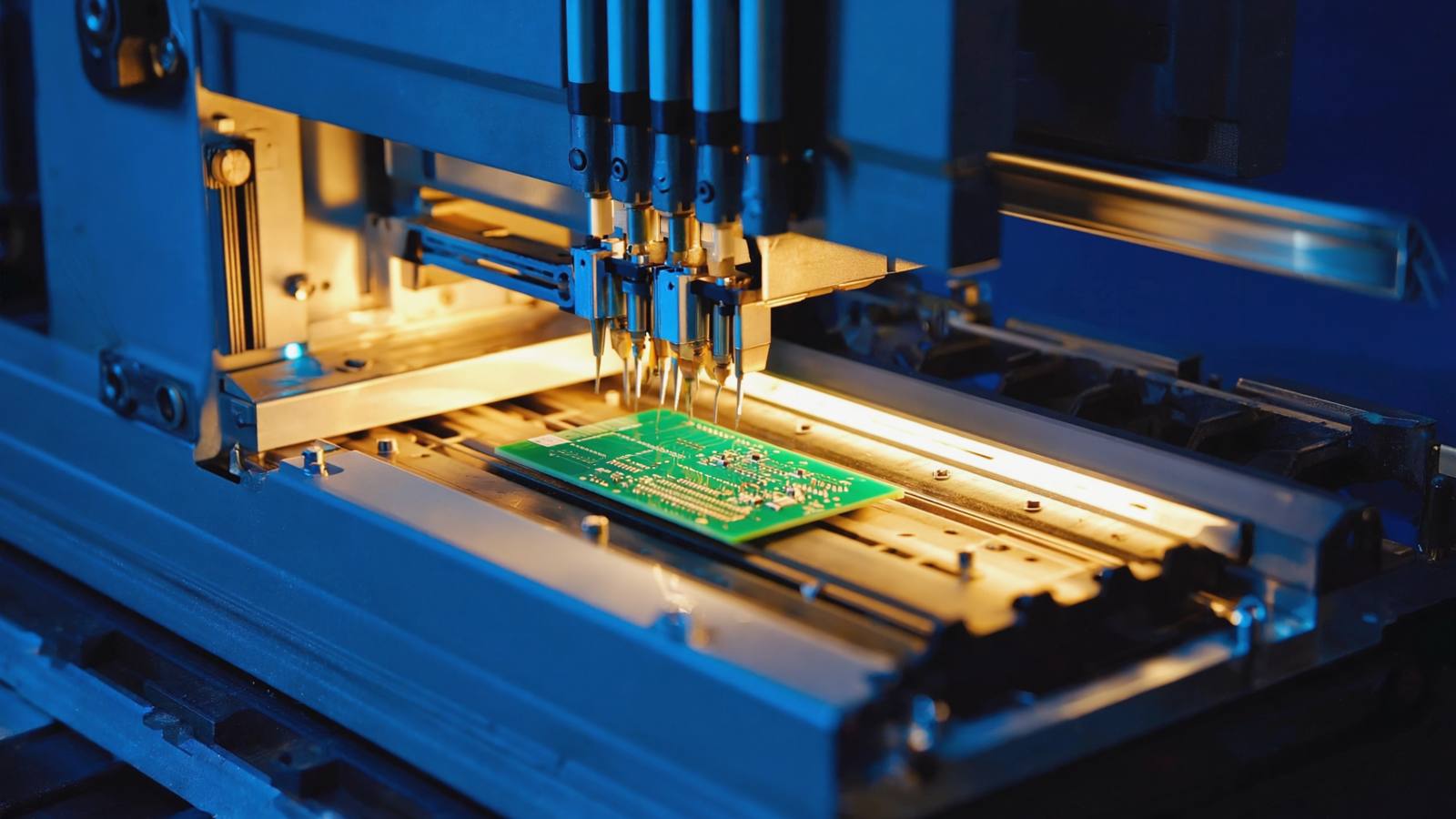
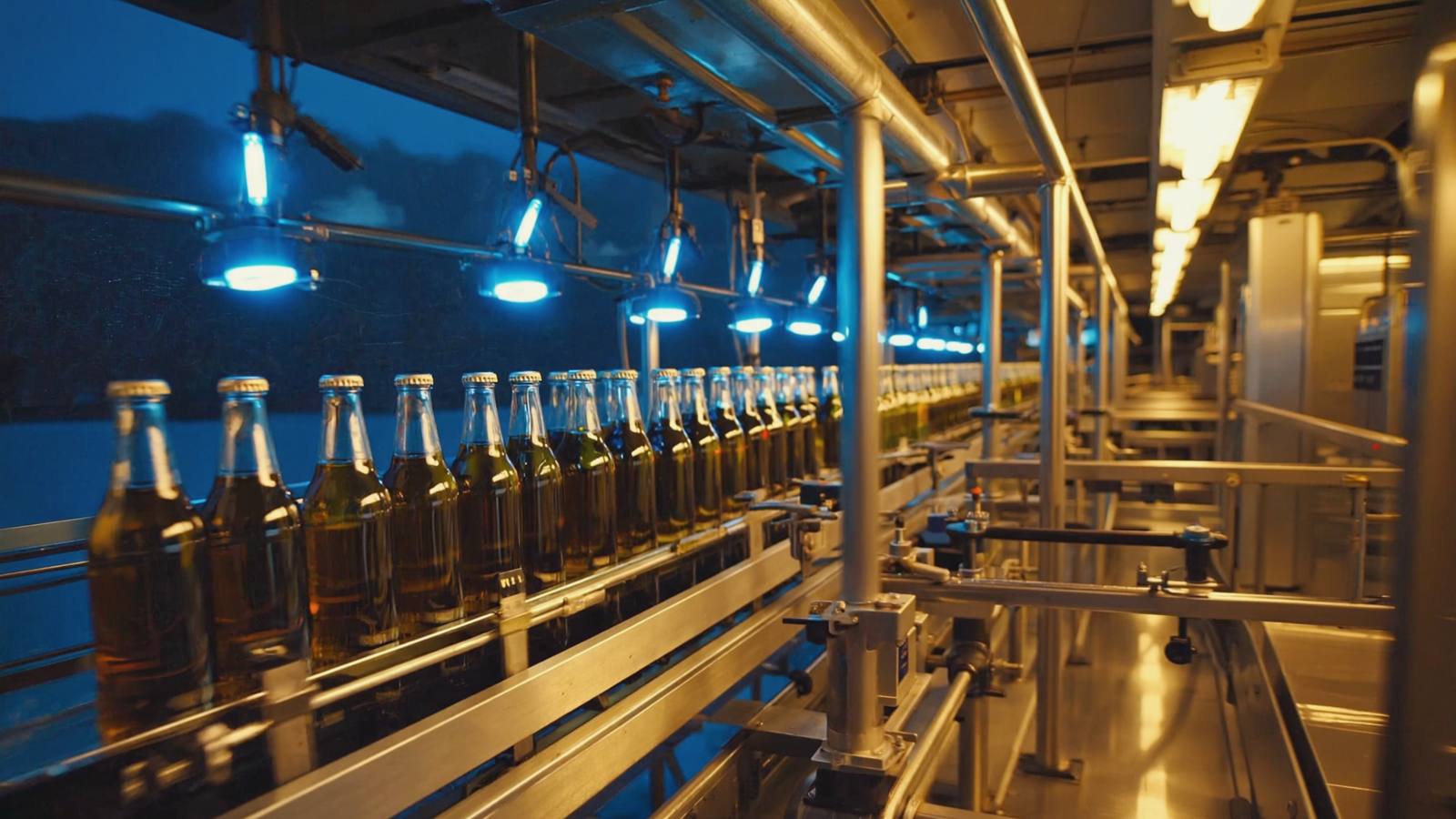
The same three layers, tuned to the line you actually run: batch records in pharma, takt-time discipline in automotive, changeover speed in FMCG, traceability in electronics.

Your choice of hosting, your control of data
Cloud-managed
- Fastest to start
- Zero IT overhead
- Automatic updates
- Bundled hosting & storage
Customer VPC
- Your cloud account
- Governance control
- Compliance policies
- Secured connections
Air-gapped on-prem
- Fully on-site
- No external connectivity
- Complete data control
- Defence / pharma ready
From vision to production in weeks
Assessment
Floor walk, requirement gathering, integration points mapping.
Setup & config
PlantOps deployment, machine connectivity, ERP mapping.
Testing & training
Pilot line validation, operator training, data verification.
Go-live & scale
Production deployment, additional lines, continuous optimization.
What the first deployment is scoped to deliver
We are early in commercial deployment, so we publish scope rather than borrowed averages. These are the deliverables a first line is scoped around. The baseline and the improvement target come from your own measurements, agreed during the assessment and written into the pilot.
Scoped with you, on a floor walk or a remote assessment
From kick-off to a running pilot on that line
Your measured starting point, before any target is set
Every stop, deviation and approval recorded at the moment of detection
To deploy, not months or years
ROI-driven investment starting with quick wins
Industry studies publish wide ranges for cycle time, OEE and manual data entry after automation programmes. We would rather agree a target against your own baseline than quote someone else’s number as ours.
Start with one line.
A line assessment is the fastest way to see where the platform fits your plant, and which product to start with: Sight, PlantOps, Flow or Twin.
Not ready to talk? Get one note when pilot slots open.
No spam. Just one note when wiseDo is ready for your plant.